Retirement, Financial Risks and Negative Interest Rates

-Develop Not Just a Retirement Plan But a Retirement Strategy

By far the most predominant question among Canadians that are in the early stages of retirement or who are contemplating entering this stage of life is:  

Will I have enough money to last my lifetime without compromising my lifestyle? 

In an earlier article entitled, Risky Business”-The Retirement Conundrum”, I identified the various financial risks that must be considered in developing a retirement plan. The question posed reflects one of the more challenging risks associated with retirement-longevity risk. 

But this is only one of several financial risks that need to be addressed or at the very least understood, when contemplating retirement.

Let me explain. READ ON

Are We Living Too Long?

My grandfather was 93 years of age when he was struck down and killed instantly by a car while crossing the street at night in front of his house. He had lived independently for years after my grandmother passed away. He was never sick a day in his life and continued to have all of his faculties. He allegedly had been playing “crokinole” with a little old lady across the street, just before the accident. 

When I tell this story, most people react by saying “ Oh, how sad!” My response over the years has consistently been the same, “I think we all wish we could be so lucky.”  

My wife recently returned from visiting my mother-in-law who has an advanced form of dementia and who resides in a dementia unit in an adult seniors care facility. Apart from her mental state, and being wheelchair bound, she is otherwise in good health. She is currently the same age as my grandfather, when he passed away. After a particularly frustrating visit, my wife remarked, “I think she has lived too long”.  She was not being disingenuous but rather it was a thoughtful statement made by someone who is as committed, understanding, loving, caring and compassionate as any daughter could be in the circumstances. 

At first blush, I was taken aback and somewhat surprised by the remark, as my wife loves her mother dearly. Upon reflection, however, I decided to explore the context of that statement more closely and what follows is the result of that enquiry, which some may find provocative. 

For others, I hope it is at least informative and offers some food for thought!READ ON

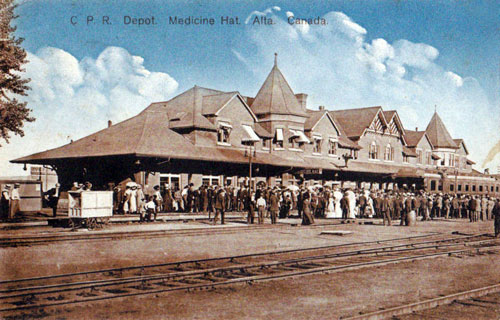
The Holten Canadian War Cemetery Memorial Project and a Tribute to the Fallen Soldiers from Medicine Hat

I have always had a keen interest in history and more recently genealogy and from time to time have researched and endeavoured to document my family history, for what purpose, I was not exactly sure. I have always enjoyed researching and writing, which was a natural mainstay of my chosen profession. In my retirement, I continued with this passion for writing and created my own blog, where I posted many of my articles on genealogy and other topics that I found of interest. (https://wjanhorn.ca or simply search William J Anhorn QC). Most recently, my genealogical research and interest in history intersected resulting in this fascinating article entitled, “The Holten War Cemetery Memorial Project and a Tribute to the Fallen Canadian Soldiers from Medicine Hat”.
READ ON

Term Limits for Directors in Alberta


Has the Implementation of Term Limits Produced the Desired Effect?

A recent conversation surrounding a proposed amendment to an organization’s by-laws intended to address with greater precision and clarity the issue of “Term Limit for Directors” caused me to reflect on my own Board experience over the years and to relive for the moment, the considerable debate which occurred when this topic first surfaced around the Boardroom table. It prompted me to make some observations and offer some thoughts on the subject from someone who might be described as a “wily” veteran. READ ON

A Distinguished Victoria Cross Recipient and a Medlicott Family Connection

I have always enjoyed reading about history and more recently, I became fascinated with the history of WWI. This was prompted by the discovery of pictures of my wife’s grandfather and great uncle, Thomas and Edward Medlicott, who were members of the Canadian Expeditionary Force and who served gallantly overseas in the Great War. Most recently, I had occasion to travel to France and Belgium and visited the Vimy Ridge Canadian War Memorial and famous WWI landmarks and cemeteries including familiar places or names like Ypres, Passchendaele and the infamous Hill 60 among many others. This evoked an even greater interest and passion in this remarkable chapter of our world history.

A recent discovery while conducting some genealogical research of a distant relative that was awarded the Victoria Cross for bravery and gallantry is worth being documented and a story which you might find of interest. READ ON

Successful Aging: Develop a Passion and a Purpose

We all wish to age well in our retirement. But how?

In an earlier article entitled, “ The Emotional Phases of Retirement” , I used the term “successful aging” to describe that emotional phase of retirement when we have effectively reached a point where “life is good” and we have reached a measurable degree of contentment.  This is when the accomplished retiree considers that the retirement role has been mastered and he finds himself in a comfortable and rewarding routine, which is both satisfying and enjoyable. He has reached the ultimate goal of retirement. He is relaxed and has a feeling of comfort and can look back and take pride in the fact that he has “worked” hard and has made a valuable contribution and now is being justly rewarded. His financial plan is has come to fruition and is firmly in place and relatively speaking, he is financially secure.

We all strive for this feeling of contentment.

But how do we get to this place?

Although financial security is a very important aspect of “successful aging”, equally important is creating an environment for emotional stability as we go down the “runway” of life.

As one author commented, “Self-acceptance, positive attitude, creative expression, purposeful living and spiritual connection” all play an important role in achieving successful and meaningful aging.

READ ON

“CBD” and “THC”: Two Acronyms You Should Know About in Today’s World

In two earlier articles entitled, “Bill-C45: The Cannabis Act and the Canadian Visitor to the United States” and more recently, “Cannabis, Medical Marijuana and the Canadian Visitor to the United States of America, I discussed in some detail, the legalization of “cannabis” in Canada and the implications for the Canadian Visitor to the United States. Embedded in these articles is an explanation about the legal anomaly that exists in the United States, where legalization of “marijuana” has become a “patchwork” of legislation and regulations, both at the State and Federal level. A handful of States have legalized the substance both for recreational and medicinal purposes in varying degrees, while the Federal Government (which includes the Department of Homeland Security and the Customs and Border Service), considers “cannabis” or “marijuana” to be a controlled substance, under Section I of the Controlled Substance Act (CSA), 21 U.S.C. § 802(16), such that its possession and use continues to be a serious criminal offence in the United States. This is potentially problematic for the Canadian visitor and those involved in the “cannabis” industry in Canada, which I explained.

CBD and THC: “What’s it all about Alfie?”

With the legalization of “cannabis” in Canada and several States in the U.S., (including California), I lamented in one of my those articles that it was unlikely, given the average age of the typical “Snowbird” that the use of “cannabis” for recreational purposes would become a popular leisurely retirement activity.  On the other hand, as evidenced by some recent discussions with some close friends and relatives, the therapeutic use of “cannabis” or other forms of the substance and its derivatives is receiving more and more attention, and those suffering from a myriad of aliments from sleep disorders, insomnia, anxiety, depression and chronic pain are apparently finding some relief. Some have reported that its use has a “calming” effect and that it allows one to be more focused and not as “stressed out” thereby creating a healthier and more positive outlook on life.

Most of my knowledge on this subject was limited to two common acronyms–CBD and THC, both being components of “cannabis” with each having their own unique qualities. As a former Federal Drug Prosecutor, THC was well known to me in my former life as being the active component of cannabis that produces a “high” or psychotropic effect in terms of its recreational and at the time, illegal use.

How things have changed?

More recently, CBD has become a popular term and has increasingly crept into our vocabulary and “adult” conversation at our regular “Happy Hour”.  Some of my friends have been touting it as a new “wonder drug” offering many anecdotal positive experiences.

At the risk of offending those from the Mediterranean island, all of this was “Greek” to me and somewhat of a mystery, so I thought it might be a useful exercise to examine this area more closely and try to clarify the mystic surrounding these acronyms –CBD and THC and offer some incite into the multitude of new “products” now being promoted commercially in the United States and Canada.

READ ON
“No Irish Need Apply:” The McIvor Family History

The earliest memory I have of my grandfather, William John McIvor (after whom I was named) and grandmother Catherine Brady McIvor (nee McCann) were their brogue Scottish accents, particularly that of my grandfather. Both were born in Glasgow, Scotland.

Margaret Mary was the first child of  William and Catherine McIvor and my mother. She married Theodore John Anhorn on April 14th 1950. I was born on December 18th, 1950 and was their first child and the first grandchild of William and Catherine McIvor.

My mother was extremely proud of her Scottish roots and until her death most recently prominently displayed the Campbell Clan tartan and plaque on her wall. She was always quick to boast of her Scottish heritage.

From very early in my life when asked about my own heritage, I was quickly identified myself as half German (Anhorn) and half Scottish (McIvor).

Most recently however, while conducting some genealogy research in relation to our McIvor family tree, I discovered, much to my surprise, that my family originated not from Scotland but rather Ireland and that my true ancestry therefore is not Scottish but Irish! READ ON

Ageism and the Insurance Industry

-A Topic Which is Not Often Mentioned

In the 1960’s, Geriatrician Robert Butler coined the phrase “ageism”. It was used in the context of the prevailing social practice of stereotyping older people and the aging process in a negative manner. It reflected existing societal attitudes towards the elderly, which portrayed them often in disparaging terms and that identified them as unflattering stereotypes. As time progressed, ageism was viewed more in a legal context having regard to policy or practices, which were considered prejudicial or discriminatory in nature.

Today, ageism is defined more specifically as discrimination on the basis of a person’s age.

In a time of increased diversity and a desire to promote inclusivity within Canada, ageism is seen as one of the newest challenges facing society. Much of the world is caught up in the #MeToo movement, which focuses on sexual harassment in the workplace. But in addition, there is a growing awareness and strong sentiment being expressed also about age discrimination in the workplace environment.

But there are other areas where ageism is not often mentioned but in reality exists to the financial detriment to the “retiree” or “senior citizen”. This prompted one observer to remark,

Ageism is the most tolerated form of social prejudice in Canada and there is no greater safe haven for this kind of prejudice than in the insurance industry.”

In my opinion, one of the last bastions, where age discrimination continues to be accepted and tolerated is in the area of private sector insurance and in particular, private health insurance and more specifically, Travel Medical Insurance.

Let me explain.

READ ON

A “Busy” Retirement: Is it the Right Kind of Busy?

In a recent article entitled, “The Emotional Phases of Retirement”, I reviewed in some detail various academic studies on “retirement” that focused on a part of retirement planning not often considered or discussed, as people contemplate this phase in their life. Most articles and books on retirement planning place emphasis on the financial aspect of retirement, many promoting their own version of a plan which is guaranteed to produce financial results. Few discuss in any meaningful fashion, the “emotional” aspects of retirement and how to cope with this significant change in lifestyle. A friend who is much younger than I and who is still working but contemplating this next phase in his life, recently asked me, “if I had any difficulty in adjusting to retirement”. After a lively discussion, I sent him an email with some information on the topic.  READ ON